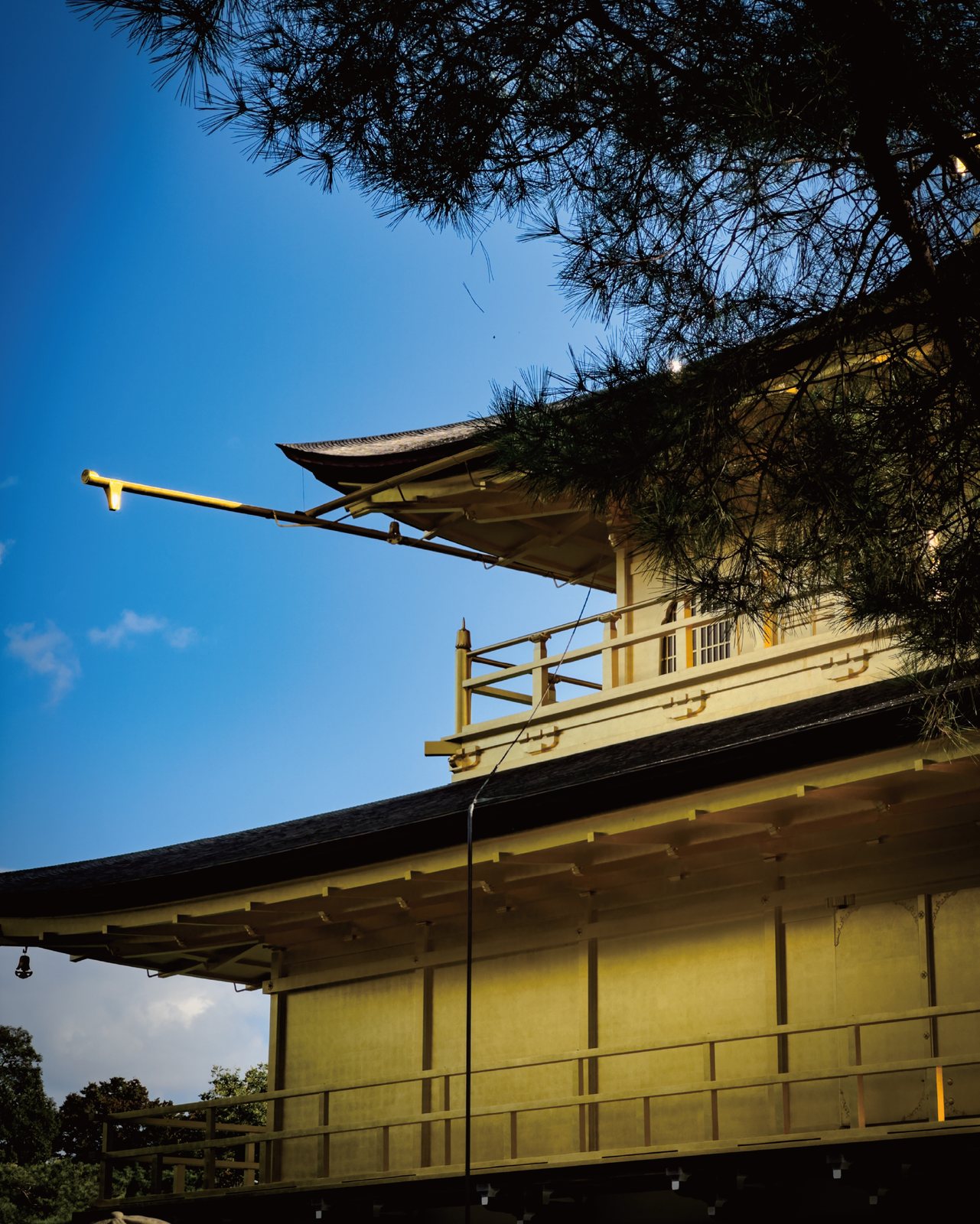
Kyoto's temples and gardens ask for different distances. Sometimes the building belongs across a pond; elsewhere a roof edge or a narrow shaft of light between bamboo stems is enough.
These four places are grouped by the way I framed them, rather than as a route. They span different areas, so check each venue's current access and photography guidance.
Kinkaku-ji — from pond reflection to golden eaves
A wide view across the pond places the pavilion among pines and its reflection. A closer view through branches brings the roofline and material forward.
When light touches the building under a darker sky, the contrast becomes especially clear. Watch the reflection as well as the pavilion.
View Kinkaku-ji photos ↗Tenryu-ji — quiet space beneath the eaves
Seen from below, the roof and columns frame an open courtyard. Keeping the eaves near the top of the image leads the eye from shade into the garden.
After a view of the building, separate the pond, stones and distant ridge into smaller frames to show how architecture meets landscape.
View Tenryu-ji photos ↗Arashiyama Bamboo Grove — repeated vertical lines
The bamboo stems repeat while light and the movement of people change along the path. Compare a centered path with a frame weighted toward one side of the grove.
Limit the bright sky and look for the rhythm between light and shadow to preserve a sense of depth.
View Arashiyama Bamboo Grove photos ↗Gio-ji — a small landscape filled with moss
Here the subject is moss, curved trunks and bamboo rather than a monumental building. A low view with a stone step or trunk at one edge gives the garden depth.
Stay on designated paths to protect the plants, and keep subtle differences in green rather than lifting every shadow.
View Gio-ji photos ↗